Latency is one of the most significant yet frequently misunderstood challenges in modern digital audio production. In professional recording, mixing, and live performance environments, even a delay of just a few milliseconds can affect musical timing, disrupt performer feedback, and reduce the efficiency of production workflows. Musicians may feel disconnected from their performance, engineers may struggle with monitoring delays, and producers may encounter system instability as projects become more complex.
Understanding the origins of latency—and more importantly, learning how to manage and minimize it—is an essential skill for anyone working with digital audio technology.
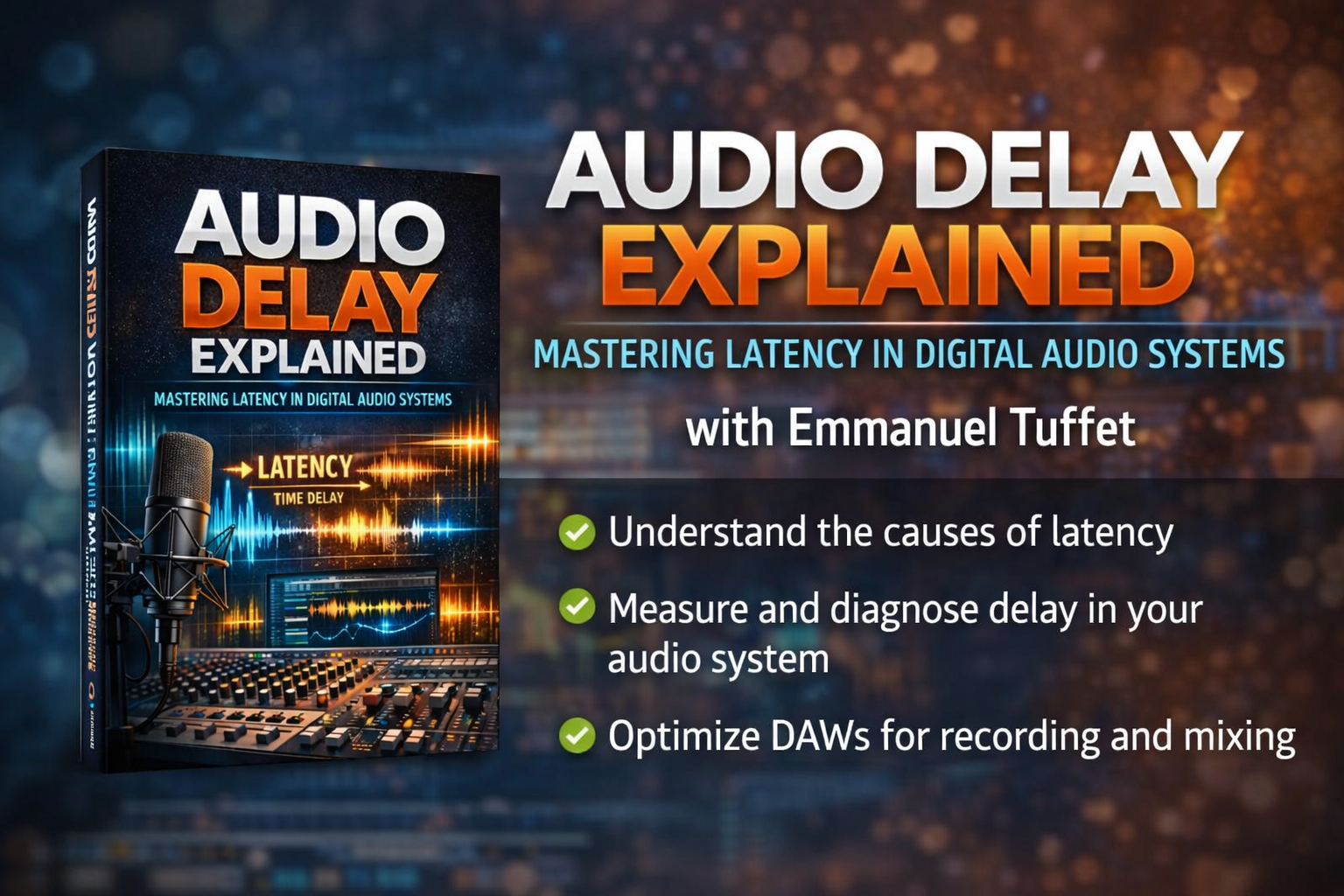
Audio Delay Explained: Mastering Latency in Digital Audio Systems is a comprehensive course designed to help musicians, producers, and audio engineers develop a clear and practical understanding of latency in modern audio environments. The course explores both the theoretical foundations and the real-world engineering techniques required to identify, measure, and eliminate delay across recording systems.
Participants will begin by examining the core principles of digital audio, including analog-to-digital conversion, digital signal processing, sampling rates, and buffer architecture. These concepts provide the technical foundation necessary to understand how audio signals travel through microphones, audio interfaces, digital audio workstations (DAWs), plugins, operating systems, and output devices.
As the course progresses, learners will explore the primary sources of latency within typical studio and live sound setups. Students will gain hands-on knowledge of how buffer sizes, driver protocols (such as ASIO, Core Audio, and WASAPI), plugin processing, and system resources influence real-time audio performance.
Through structured lessons, guided demonstrations, and real-world case studies, participants will learn how to:
• Analyze signal flow within digital audio systems
• Measure round-trip latency accurately using professional tools
• Configure audio interfaces for optimal recording performance
• Optimize DAW settings for low-latency monitoring
• Manage plugin and virtual instrument latency during production
• Diagnose system bottlenecks affecting audio performance
• Implement latency compensation techniques during mixing and recording
Course Features
- Lectures 6
- Quiz 0
- Duration 10 weeks
- Skill level All levels
- Language English
- Students 0
- Assessments Yes
- 2 Sections
- 6 Lessons
- 10 Weeks